
01 · The problem
Enterprise authoring teams needed reusable components and scalable content architecture. Duplicate authoring work and inconsistent component patterns slowed delivery across teams.
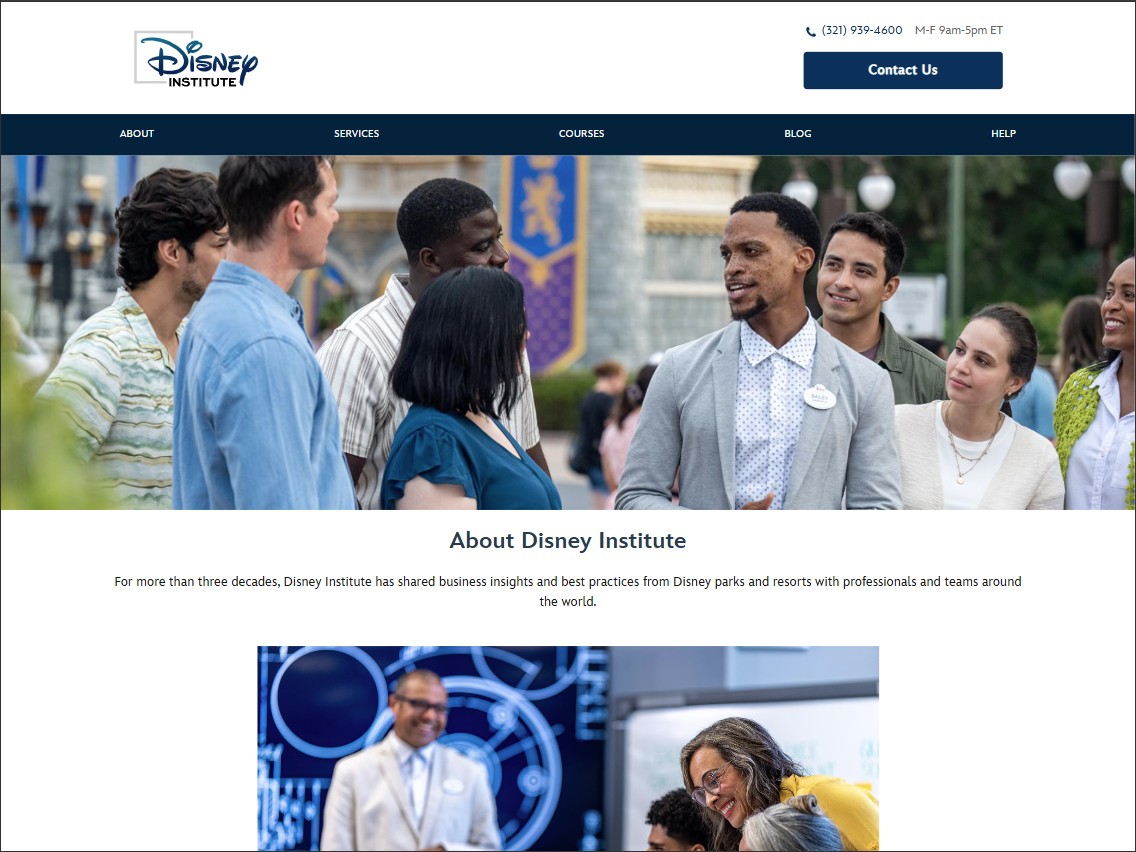
Disney Institute is one of the world's most recognized professional development brands. The platform delivers content and experiences to a global audience of professionals through an enterprise Adobe Experience Manager (AEM) stack.
02 · My role
Technical Lead · enterprise AEM delivery (Myridius / Disney)
03 · The result
Contributed to the enterprise AEM platform with reusable component libraries, improved authoring workflows, and content architecture aligned with enterprise delivery standards. Collaborated with design, QA, and delivery on a high-visibility client program.
04 · Architecture
- 01
Adobe Experience Manager as the content and experience platform
- 02
Reusable component library shared across authoring teams
- 03
React-driven presentation layers where interactive experiences required it
- 04
Structured delivery with design, QA, and multi-team coordination
The story
- The constraints
- Enterprise authoring, multiple delivery teams, and a brand that cannot look experimental. Diagrams here are generalized — not an internal Disney topology.
- The hard part
- Reusable components only help if authors recognize them and teams share names.
- The trade-off
- A shared AEM library slows the first ticket and speeds the twentieth. Local one-offs feel faster until they fork.
- What broke
- Nothing I can publish as a client incident. The recurring cost was duplicate authoring, not a named outage.
- What changed
- Shared component patterns and clearer authoring paths on the public Institute site.
- What I would do differently
- I would still start with the authoring workflow, then the component API — not the other way around.
Diagram
Authors
- Purpose
- Write courses and keynotes in the CMS.
- Trade-off
- Governance vs speed.
- Scale
- Many authors, one library.
Implementation

- Reusable AEM components for consistent authoring
- Scalable content architecture for global audiences
- Improved authoring workflows across teams
- Cross-functional delivery with design and QA
Challenges & outcomes
Challenges
- Balancing enterprise governance with practical authoring speed
- Keeping component APIs consistent across multiple delivery teams
- Working inside structured client frameworks without blocking progress
Outcomes
- Reduced duplicate authoring effort through shared component patterns
- Improved maintainability of content structures used at global scale
Lessons
- Enterprise CMS work succeeds when components encode real authoring workflows
- Reusable architecture only sticks when teams agree on naming and contracts
- High-visibility clients reward clarity in documentation and demos
Related writing
- Reusable AEM Components That Actually Reduce Authoring Work
Lessons from enterprise Adobe Experience Manager delivery on making component libraries useful for authors, not just developers.